A Practical Guide to HR Risk Management
Updated: Apr 30
One employee complaint, one poorly handled termination, or one outdated policy can create costs that far exceed the time it would have taken to prevent the problem. That is why a guide to HR risk management matters most when a business is growing fast, adding managers, or relying on informal people practices that no longer fit the size of the company.

For small and mid-sized businesses, HR risk is rarely about one dramatic event. More often, it builds quietly through inconsistent hiring, missing documentation, weak manager training, unclear policies, and compliance gaps that stay hidden until a claim, audit, or turnover problem forces them into view.
What HR risk management actually means
HR risk management is the process of identifying, reducing, and responding to people-related issues that could harm the business. That includes legal exposure, employee relations problems, operational disruptions, reputational damage, and leadership blind spots.
The goal is not to eliminate all risk. That is not realistic, especially in a growing company. The goal is to make better decisions early, document them well, and put enough structure in place so the business can scale without creating preventable problems.
A good HR risk strategy should support growth, not slow it down. If your policies are so rigid that managers cannot lead effectively, that creates a different kind of risk. The right approach balances compliance, practicality, and business needs.
A guide to HR risk management starts with visibility
Most businesses do not struggle because they do not care about HR. They struggle because risk is spread across hiring, payroll, management, leave administration, training, and culture, with no single system keeping it aligned.
That is why the first step is visibility. You need to know where your exposure sits today before deciding what to fix first.
Start by reviewing how the employee lifecycle actually works in your business. Look at recruiting, interviewing, onboarding, pay practices, performance management, discipline, leave requests, accommodations, complaints, and separations. Then compare what managers are doing in practice against what your handbook and policies say should happen.
This review often reveals the same pattern. Leadership assumes processes are consistent, but different managers are making different decisions, using different forms, and applying different standards. That inconsistency is where many HR problems begin.
The core areas where HR risk shows up
Hiring is usually one of the earliest pressure points. When a company is trying to fill roles quickly, interview processes can become informal. That often leads to inconsistent questions, poor documentation, missed background check protocols, or compensation offers that are not aligned across candidates.
Those issues do not just affect compliance. They can also create retention problems and undermine trust before the employee has even started.
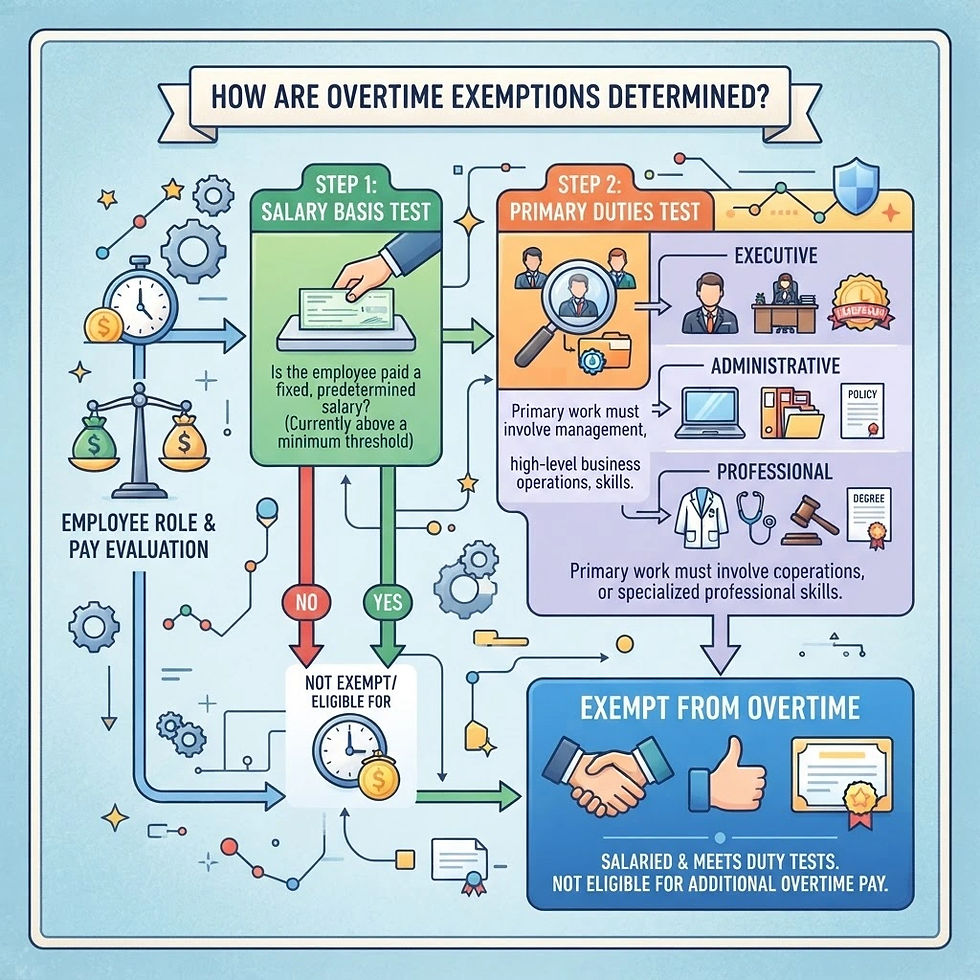
Classification and wage practices are another major area. Businesses commonly run into trouble with exempt versus nonexempt status, overtime calculations, meal and rest break practices, contractor classification, and timekeeping expectations for remote or mobile employees. These are not small administrative details. They carry real financial exposure.
Employee relations risk tends to grow as headcount grows. If managers are not trained to address behavior, attendance, and performance issues consistently, documentation becomes weak and decisions start to look arbitrary. Even when the business had a legitimate reason for action, poor execution can make that hard to defend.
Leave management and accommodations require special attention. Federal, state, and local rules can overlap, and employers often underestimate how quickly a routine medical issue can become a compliance problem. The challenge is not just knowing the law. It is having a repeatable process for handling requests, documenting decisions, and communicating clearly.
Terminations create some of the highest-risk moments in HR. Final pay, documentation, timing, severance considerations, security access, benefit notices, and manager communication all matter. A termination handled carelessly can trigger claims that were avoidable with better preparation.
Policies matter, but only if they match reality
Many companies have a handbook, but that does not mean they are protected. A handbook that is outdated, copied from another employer, or disconnected from day-to-day operations can create a false sense of security.
Good policies set expectations, support compliance, and give managers a framework for decision-making. They should be clear, current, and usable. If a policy says one thing and leaders routinely do another, the policy is not reducing risk.
This is especially important in areas like harassment reporting, attendance, remote work, paid leave, standards of conduct, progressive discipline, and complaint procedures. These are the policies businesses rely on when situations become difficult. If they are vague, inconsistent, or out of date, they will not hold up when you need them most.
Manager training is a risk control, not a nice extra
A large share of HR risk sits with frontline and mid-level managers. They decide how to interview, how to respond to complaints, how to document performance concerns, and how to communicate during sensitive employee situations.
Without training, managers often rely on instinct, past experience, or informal advice. That creates inconsistency and exposes the company to unnecessary risk.
Training does not need to be complicated to be effective. Managers should understand basic interviewing boundaries, wage and hour fundamentals, documentation standards, leave escalation protocols, anti-harassment expectations, and when to involve HR before taking action. Practical training tied to real business scenarios works better than generic presentations.
Documentation should support decisions, not just fill a file
Documentation is often misunderstood. More paperwork does not automatically reduce risk. What matters is whether the documentation is timely, factual, consistent, and tied to a legitimate business reason.
For example, a performance concern should describe what happened, what standard was not met, what expectations were communicated, and what follow-up is required. It should not read like a personal opinion or an emotional reaction.
This applies across the employee lifecycle. Offer letters, acknowledgments, performance notes, investigation records, corrective action, leave communications, and termination documents all need to be organized and defensible. If the business cannot explain its own decisions with clear records, its position weakens quickly.
Use a risk-based approach to prioritize fixes
Not every HR issue deserves the same level of urgency. If everything is labeled high priority, nothing gets resolved in a disciplined way.
A practical guide to HR risk management should separate issues into three categories: what could trigger immediate legal or financial exposure, what is creating recurring operational strain, and what will become a larger problem as the company grows. That framework helps leadership focus resources where they matter most.
For one company, the biggest risk may be misclassification or a missing leave process. For another, it may be inconsistent discipline across departments or a lack of onboarding structure that is driving turnover. It depends on your workforce, your industry, your growth stage, and the maturity of your management team.
The strongest HR plans usually address one urgent compliance issue, one manager capability issue, and one foundational process issue at the same time. That produces visible progress without overwhelming the organization.
Build HR systems that can scale with the business
The businesses that manage HR risk well are not always the ones with the biggest internal teams. They are often the ones with the clearest systems.
That means defined hiring steps, updated policies, manager guidance, documented performance practices, clear employee communication, and regular HR reviews. These systems create consistency, which is one of the best forms of protection a growing company can have.
There is also a business upside. Strong HR systems reduce disruption, support retention, improve manager confidence, and help leadership make decisions with better information.
Risk management is not separate from growth. It is part of building a company that can grow without constant people-related setbacks.
For many business owners and operations leaders, this is the point where external HR support becomes valuable. An experienced partner can spot gaps faster, prioritize the right fixes, and help implement practical structure without adding full-time overhead.
If your company has grown beyond informal people management, now is the right time to act. Waiting until a complaint, agency inquiry, or turnover spike forces change is usually the most expensive route.
The best time to strengthen HR is when the business is stable enough to build the right foundation, but early enough to prevent avoidable problems from shaping the next stage of growth.
Ready to build a stronger, more compliant business without the headaches? As a Minneapolis-based firm serving small businesses since 2003, HR Business Partners, Inc. provides the hands-on, strategic HR support you need. Schedule your free consultation today at https://www.hrbponline.com/contact-us