top of page
Team Handshake Meeting

Fractional HR Support That Feels Like Part of Your Team

Real HR leadership without the full-time cost.
Compliant, responsive, and built for small and growing businesses.

200+ Business Supported

20+ Years of HR Experience

100% U.S .- Based HR Experts

5-Star Google Rating

HR Support That Drives Real Results

We help small and mid-sized businesses reduce risk, improve culture, and
get back to what they do best.

Stay Compliant

We handle the complex
so you stay protected.

Empower Your Team

Better processes.
Stronger culture.

Save Time & Money

Get expert support
without the overhead.

Scale With Confidence

Flexible support that
grows with your business.
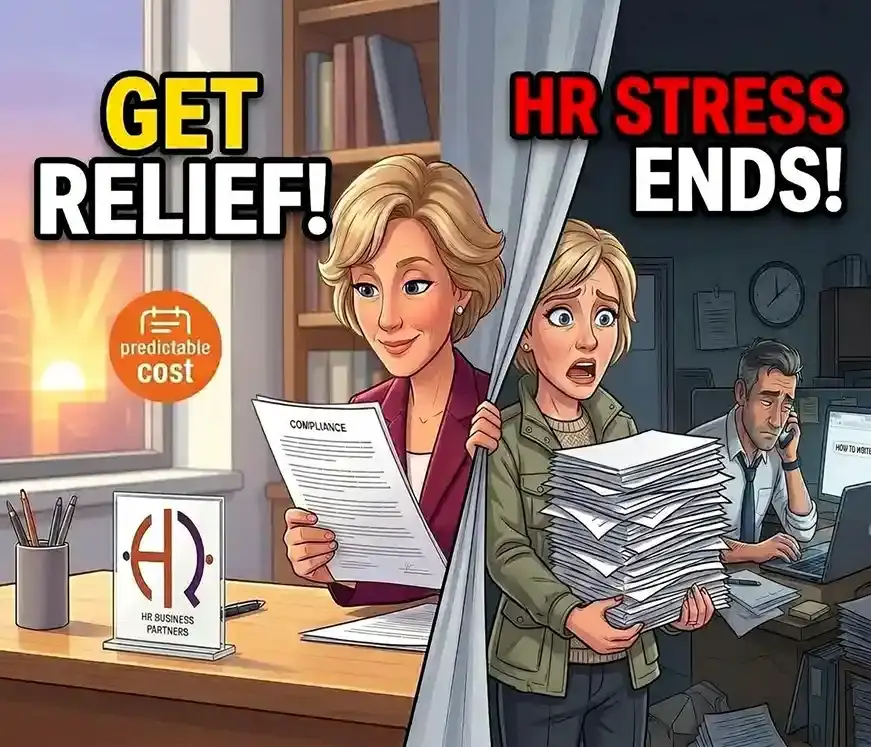
Screenshot_2.png

See How Our Model Works

A better way to get senior-level HR

support-without the full-time salary.

Dedicated HR Partner

10 Hours of Support Per Week

Strategic Guidance & Execution

Your HR Partner - Not a Vendor

We embed with your team to deliver consistent, proactive, and results-driven HR support.

compliance_risk_option2_clean.webp
Compliance & Risk Mitigation
employee_relations.webp
Employee Relations 
onboarding_off.webp
Onboarding &
Offboarding
hr_process_and_doc.webp
HR Processes &
Documentation
employee_performance.webp
Performance
Management
manager_support.webp
Manager Support

Frequently Asked Questions

  • The HR department is responsible for managing the human resources of a company. Its functions include recruitment, employee benefits management, company policy development, employee training, occupational health and safety compliance, employee relations, conflict management and resolution, performance management, succession planning, and career development. HR professionals play an important role in cultivating a positive work culture and ensuring that the company complies with applicable employment laws and standards. Ultimately, the HR department works to maximize the potential of the company’s workforce and contribute to its success by managing its most important asset — its people.

  • Small businesses can effectively manage their human resources by establishing clear policies and procedures, implementing employee development and training plans, and conducting regular performance reviews. Other strategies include offering competitive compensation and benefits packages, promoting a positive work culture, and providing a safe and healthy work environment. Regular communication between managers and employees can also help to address issues early on and prevent potential problems from escalating. Furthermore, seeking outside guidance, such as consulting with HR professionals or outsourcing HR functions, can also help small businesses effectively manage their human resources while focusing on other core business operations.

  • Small businesses often face several HR challenges, including recruiting and retaining employees, managing employee benefits and compensation, developing and implementing company policies, scheduling and workload management, and ensuring compliance with all relevant employment laws and regulations. Small businesses may also face challenges in training and developing a skilled workforce, particularly when resources are limited. Additional challenges may include resolving employee conflicts, addressing workplace safety concerns and managing employee performance. These challenges can be particularly complex for small businesses with limited resources, making it essential to prioritize HR initiatives and implement effective strategies for managing human resources within the organization.

  • Technology can be used to streamline HR processes for small businesses in several ways. For example, HR software and applicant tracking systems can automate the recruitment process by sorting resumes, scheduling interviews and even conducting initial screening interviews via chatbots. Time and attendance tracking software can streamline leave approvals and payroll management. Cloud-based HR software can also be used for performance management and employee training. Technology can significantly reduce the administrative burden on HR personnel and better align HR operations with overall organizational objectives. Taken together, these tools can help small businesses improve their human resources management practices while at the same time reducing the time and resources required to do so.

  • Some best practices for recruiting and hiring employees for a small business include defining the job and required qualifications, creating a compelling job ad, using multiple recruiting channels, conducting a thorough screening process, making a timely hiring decision, ensuring legal compliance, and developing an effective orientation program. By following these best practices, small businesses can attract, recruit and hire top talent that will help the company grow and succeed. It is important to ensure a good fit between the new hire and the organization from the start, and to provide necessary orientation, training and development opportunities to help employees thrive and contribute to the success of the company.

  • Small businesses can create an effective onboarding process for new employees by developing a clear plan that outlines expectations and desired outcomes. The plan should include a comprehensive review of company policies and procedures, benefits, administrative formalities, and necessary documentation. The use of visual aids, videos and interactive tools can help reinforce the information presented. Assigning mentors, conducting orientation events and scheduling follow-ups will ensure the new employee has all tools to establish a successful relationship with the company. Establishing ongoing training and development plans will benefit the employees in their role and overall success of the company. A successful onboarding process will kickstart employee satisfaction and motivation levels, improving retention and contribution to the company.

  • Small businesses can manage employee performance and development by aligning employee goals with the company’s strategies, conducting frequent evaluations, providing constructive feedback, offering career development and training, promoting a positive work culture, developing incentive programs, as well as checking in frequently to ensure employee needs are being met. These strategies help improve employee performance, productivity, and satisfaction, while also ensuring that the business has a skilled workforce aligned with its goals. Regular communication and feedback can help employees better understand their responsibilities and how their work contributes to the company’s success. Small businesses can create a continuous development culture for their employees based on these strategies, boosting overall team and organizational performance.

  • Small businesses can handle employee terminations effectively by having a clear and documented termination policy in place, and conducting the termination process in a respectful, confidential manner that adheres to any legal requirements. Prior preparation could include reviewing related agreements, checking on documentation related to performance and previous warnings. Employers should allow the employee to have a platform to express themselves and explain the reasons behind the termination. Communication should be clear and professional, while providing relevant information necessary to the employee. Small business owners should keep record of the proceedings to ensure compliance with employment laws and to support the reasons for termination if legally challenged. Finally, following through with appropriate notifications to all stakeholders involved and ensure remaining employees receive required guidance and support.

IN THE MEDIA

HRBP as seen on FOX 9

Karen Gureghian, a Founding Partner of HR Business Partners, as seen on FOX 9 KMSP.

SHRM logo
SHRM professional certificate
google-5-star-reviews-1080x674.webp
MN_cc.png
GreenLeaf 
Wellness
Acme Co. 
BrigthPath
Solutions
Summit 
Consulting
Pioneer
Industries

Ready for real HR support-without the full-time cost?

Let's build a stronger, more compliant, and more productive workplace-together.

Why Work With Us

Senior HR expertise, on your terms

Flexible support-no full-time hire needed

Proactive, not just reactive

Built for small & growing businesses

Part-time HR dept . Full-time results. ™

bottom of page