Iowa Employee Handbook Requirements for Employers
Updated: 6 days ago
A handbook issue often surfaces at the worst possible time: when a manager needs to address attendance, an employee raises a leave question, or a termination is already underway. Understanding Iowa employee handbook requirements before that moment gives leaders a clearer framework for decisions and helps prevent inconsistent treatment across the team.

For Iowa companies with 10 to 75 employees, an employee handbook is more than a policy file handed out during onboarding. It is a practical operating tool that sets expectations, supports managers, documents your approach to people decisions, and creates structure as the business grows.
Are Employee Handbooks Required in Iowa?
Iowa law does not require most private employers to create or distribute an employee handbook. That does not mean a handbook is optional from a business-risk perspective, especially once multiple managers are making decisions about time off, discipline, pay practices, and workplace conduct.
Without written standards, employees tend to receive different answers depending on who they ask. That inconsistency can damage trust quickly and make it harder to defend decisions when an employee alleges unfair treatment, retaliation, or discrimination.
The goal is not to create a 75-page document full of legal language that no one reads. The goal is to document the policies your business actually follows, train managers to apply them consistently, and revisit them as your team and legal obligations change.
Iowa Employee Handbook Requirements That Matter Most
Because Iowa does not prescribe one mandatory handbook format, employers have flexibility. Still, certain policies are essential because they explain workplace expectations, support legal compliance, or address recurring management issues before they become larger employee-relations problems.
At-Will Employment Language
Iowa is generally an at-will employment state. Your handbook should clearly state that employment may be ended by either the employee or employer at any time, with or without notice and for any lawful reason.
This statement needs careful wording. It should also clarify that the handbook is not an employment contract and identify who, if anyone, has authority to enter into a written employment agreement on behalf of the company.
An at-will disclaimer is not a free pass to make a poor termination decision. Employers still must follow anti-discrimination, retaliation, leave, wage, and other applicable laws. It does, however, help avoid accidentally creating a promise of guaranteed employment through vague policy language.
Equal Employment Opportunity and Anti-Harassment
A clear equal employment opportunity policy should prohibit discrimination and harassment based on protected characteristics under federal, Iowa, and applicable local law. Your policy should also explain how employees can report concerns, including an avenue outside their direct supervisor.
For a small business, that alternate reporting path matters. If the owner or manager is the person involved, employees need a credible option for raising concerns without fearing that their complaint will be dismissed or held against them.
The policy should prohibit retaliation and tell employees that concerns will be reviewed promptly and as confidentially as reasonably possible. Do not promise absolute confidentiality, since an investigation may require speaking with witnesses or reviewing relevant records.
Pay, Timekeeping, and Overtime
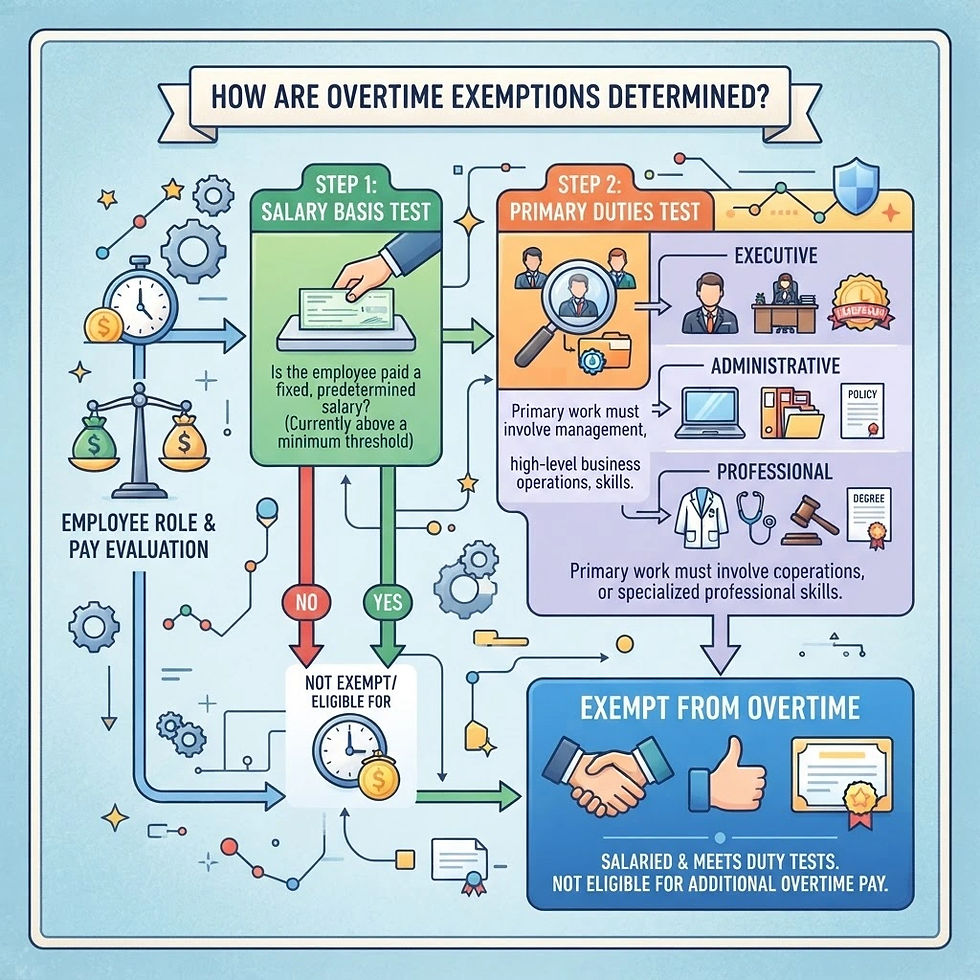
Handbook language should explain pay frequency, payroll deductions, timekeeping expectations, and who employees should contact with paycheck questions. If you have nonexempt employees, address accurate recording of all time worked, overtime authorization, meal and rest break practices, and off-the-clock work.
Iowa does not require employers to provide meal or rest breaks to adult employees, but federal wage-and-hour rules still govern whether short breaks count as paid time and whether work time must be compensated. If your company offers breaks, put the actual practice in writing and ensure supervisors understand it.
Avoid language that says unauthorized overtime will not be paid. You may discipline an employee for ignoring an overtime-approval rule, but you generally must pay for all hours worked.
Leave and Attendance Policies
Your handbook should distinguish between legally protected leave and company-provided paid time off. Depending on your size and circumstances, federal laws such as the Family and Medical Leave Act may apply, and jury duty, military obligations, pregnancy-related needs, and disability accommodations can create separate responsibilities.
Attendance language should tell employees how to report an absence, whom to notify, and when notice is expected. Be cautious about rigid no-fault attendance policies that automatically assess points for every missed day, because protected leave or accommodation requests may require an exception.
If you offer vacation, PTO, sick time, or holidays, describe eligibility, accrual, carryover, approval expectations, and what happens to unused balances at separation. Iowa employers have latitude in designing these benefits, but the written policy should match the payroll system and day-to-day practice.
Workplace Conduct, Safety, and Technology
Employees need straightforward standards for conduct, confidentiality, conflicts of interest, workplace violence, drugs and alcohol, and use of company property. The right policies depend on your industry, workforce, customer relationships, and whether employees drive, handle sensitive data, work remotely, or enter client sites.
Technology and social media policies deserve particular attention. A policy can protect confidential business information and establish reasonable expectations for company devices, but it should not improperly restrict employees' lawful rights to discuss wages, schedules, or working conditions with one another.
Safety language should reflect the actual workplace. A desk-based professional services company needs different procedures than a manufacturer, contractor, health care practice, or field-services operation. Generic wording copied from another business often creates more confusion than protection.
Policies That Need Careful Customization
Small employers are often tempted to download a free template, add their logo, and move on. Templates can provide a starting point, but they cannot account for how your company handles pay, performance expectations, remote work, benefit eligibility, discipline, or decisions involving a close-knit team.
Progressive discipline is a common example. If your handbook says employees will receive verbal and written warnings before termination, managers may feel obligated to follow every step even when serious misconduct calls for immediate action. Better language preserves the company’s discretion while still communicating that corrective action may occur.
Remote and hybrid work also require precision. Address scheduling, availability, equipment, expense handling, information security, and the expectation that employees obtain approval before working from another state. A remote employee’s location can affect tax, wage, leave, and registration obligations.
Make Distribution and Acknowledgment Part of the Process
A well-written handbook only helps if employees receive it and managers use it. Distribute the current version during onboarding, obtain a signed or electronic acknowledgment, and retain that acknowledgment in the personnel file.
The acknowledgment should confirm receipt, not force employees to agree with every policy. It should state that employees are responsible for reading the handbook and that the company may revise policies as business needs and legal requirements change.
When you make a significant revision, communicate what changed instead of simply uploading a new PDF. A brief manager meeting or employee communication can prevent misunderstandings and gives leaders a chance to reinforce how the policy will work in practice.
When to Review an Iowa Handbook
Review your handbook at least annually and whenever a significant business change occurs. Triggers include adding employees in another state, changing payroll or timekeeping systems, offering new benefits, opening a new location, moving to hybrid work, or encountering a recurring employee-relations issue.
A review is also wise before a major hiring push. The policies that worked with 12 employees may not provide enough structure at 35, particularly when new supervisors are managing people for the first time.
For many growing businesses, the challenge is not finding a policy template. It is making sure the handbook, manager behavior, onboarding process, and payroll practices all tell the same story. That is where experienced HR leadership creates real value.
A fractional HR partner can provide senior-level guidance without the fixed expense of a full-time HR director, and understanding fractional HR cost helps business owners plan that support around their growth stage. The right investment is often less than the cost of handling one avoidable wage claim, employee complaint, or poorly managed termination.
Your handbook should make daily decisions easier, not create another document that sits untouched in a shared drive. Build it around the realities of your Iowa workplace, give managers the guidance to use it well, and treat it as a living part of the business as your team grows.
Contact HR Business Partners, a Minneapolis, MN-based HR consulting firm specializing in HR Outsourcing Services / Fractional HR services, today to discuss your individual HR needs.